
-
Opening hours :
Monday - friday, 08am - 05pm
-
Address :
Saderbal, Hazratbal, Jammu and Kashmir 190006

Menu
We specialize in treating Psoriasis.
Psoriasis – Homeopathic Remedies
Psoriasis is a long-term autoimmune skin disease that appears as red, itchy patches covered with silvery-white scales. It most often affects the elbows, knees, scalp, lower back, or joints. The condition is not contagious but can cause discomfort, emotional stress, and social stigma.
With timely care and holistic management, psoriasis can be controlled. Homeopathy offers safe, natural remedies that help manage flare-ups, reduce scaling and itching, and improve overall skin health.
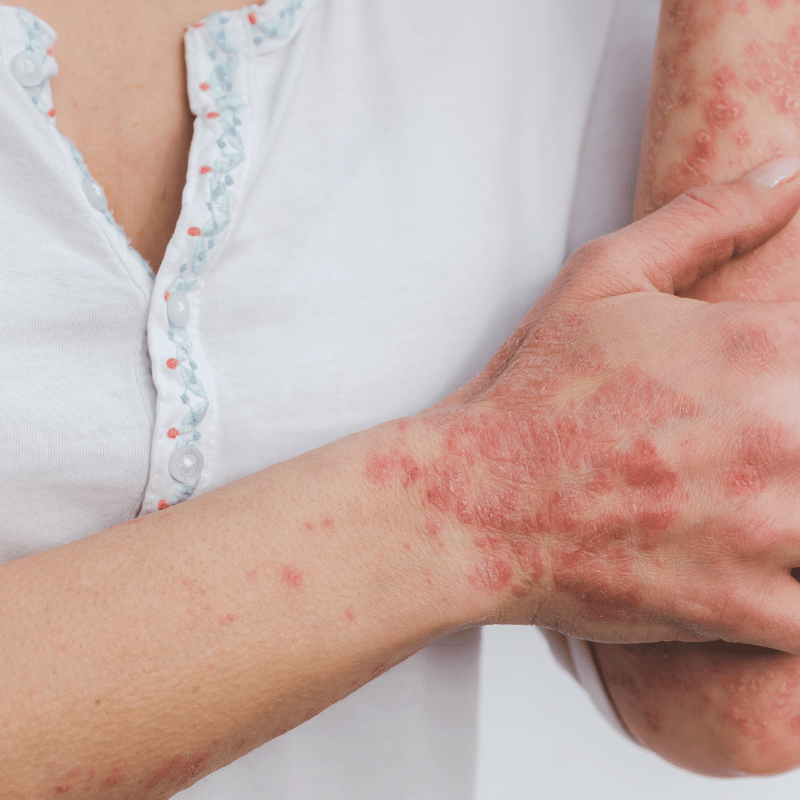

What is Psoriasis?
Psoriasis is a chronic skin condition caused by an overactive immune system. Normally, skin cells renew every 25–30 days, but in psoriasis, new cells build up too quickly, leading to thick, scaly patches.
Although not life-threatening, it can greatly affect quality of life if not treated properly.
- Types of Psoriasis
Plaque Psoriasis – The most common type; red raised patches with silvery scales.
Guttate Psoriasis – Small, red, drop-shaped spots, often after throat infections.
Inverse Psoriasis – Affects skin folds, shiny red patches without scales.
Pustular Psoriasis – White pustules (blisters filled with pus) on red skin.
Erythrodermic Psoriasis – Widespread fiery redness; can be severe.
Nail Psoriasis – Pitting, discoloration, or separation of nails.
Scalp Psoriasis – Red, scaly patches on scalp, sometimes extending to forehead/neck.
Psoriasis can appear in many forms, ranging from mild patches to widespread skin involvement. Each type has unique signs and symptoms, affecting not only the skin but sometimes nails and scalp as well. Understanding the different types helps in early diagnosis and choosing the most suitable treatment.
Health Check-ups and Screenings for Psoriasis
- Physical Examination of Skin, Scalp & Nails
- Dermatological Assessment (plaque size, thickness,& location)
- Skin Biopsy (to confirm psoriasis and rule out other conditions)
- Blood Tests (to check inflammation markers & associated autoimmune disorders)
- Joint Examination & Imaging (X-ray / MRI) for psoriatic arthritis
- Liver and Kidney Function Tests (before long-term treatment)
- Vitamin D Level Assessment
- Lifestyle & Immunity Evaluation
The specific screenings recommended can vary depending on the severity of psoriasis, associated health conditions, age, and family history. It is important to consult a healthcare provider or homeopathic physician to personalize your check-up plan.
- Causes of Psoriasis
Psoriasis develops due to immune dysfunction, genetics, and environmental triggers.
Internal Factors: weak immunity, hereditary tendency.
External Triggers: stress, cold weather, skin injuries, certain medications, smoking, alcohol, or throat infections.
- Signs and Symptoms
Psoriasis often presents with distinct signs that vary in intensity from person to person. The condition typically causes red, raised patches of skin covered with silvery-white scales, accompanied by itching, burning, or discomfort. In some cases, the skin may become excessively dry and cracked, sometimes leading to minor bleeding. Psoriasis can also affect the nails, resulting in thickening, pitting, or discoloration. Additionally, some individuals may develop psoriatic arthritis, which causes stiffness, swelling, and pain in the joints.
Complications
If left untreated, Without proper care, psoriasis can progress and cause serious complications. Persistent inflammation may lead to psoriatic arthritis, resulting in permanent joint damage and reduced mobility. Nail involvement can worsen over time, leading to nail loss or deformity. Chronic scalp psoriasis may contribute to hair thinning or loss. Moreover, individuals with untreated psoriasis face a higher risk of developing other autoimmune conditions and cardiovascular diseases, making timely treatment essential.
Diagnosis
Doctors usually diagnose psoriasis by physical examination of the skin, scalp, or nails. In some cases, a skin biopsy may be required to rule out other conditions.
- Prevention
Tuberculosis prevention relies on strengthening immunity and reducing exposure. Vaccination with BCG in childhood provides partial protection. Maintaining proper ventilation in living spaces, using masks when in close contact with patients, and practicing good hygiene are important preventive measures. Equally important is a healthy lifestyle that supports strong immunity, including nutritious food, adequate rest, and regular exercise.
- Homeopathic Management of Psoriasis
At kmrhomoeoremedies psoriasis is treated with safe and natural homeopathic remedies that go beyond symptom relief to address the root causes of the disease. Each treatment plan is carefully customized for the patient, aiming to reduce scaling, itching, and prevent recurrence.
Commonly prescribed remedies include:
- Graphites Naturalis – For dry, cracked skin with scalp sensitivity & nail changes.
- Arsenic Album – For silver scales with itching, worse in cold weather.
- Sulphur – For severe itching, burning, and bleeding from scratching.
- Petroleum – For deep cracks with bleeding and soreness.
- Sepia – For large oval lesions with shiny scales.
Through homeopathy, the focus is on providing long-term relief by controlling flare-ups and minimizing the intensity of symptoms. Treatment helps in reducing itching, scaling, and pain while also working to prevent frequent relapses. By addressing the root cause and strengthening the body’s natural defense system, homeopathy not only improves skin health but also enhances overall immunity, offering patients a holistic and sustainable path to recovery.
Frequently Asked Questions
Is psoriasis contagious?
No, psoriasis is not contagious. It cannot spread through touch, kissing, or sharing items.
Does psoriasis reoccur?
Yes, psoriasis is a chronic condition and may reoccur, but homeopathy helps reduce flare-ups.
Can homeopathy cure psoriasis completely?
There is no permanent cure, but homeopathy effectively controls symptoms and prevents relapses.
Which lifestyle changes help manage psoriasis?
Moisturizing, stress management, a healthy diet, and avoiding alcohol/smoking help reduce flare-ups.
Is psoriasis linked to other diseases?
Yes, it may be associated with psoriatic arthritis, diabetes, hypertension, and heart conditions.
Disclaimer: Results and patient experiences may vary. These are dependent on a number of factors including age, medical history, lifestyle and more.